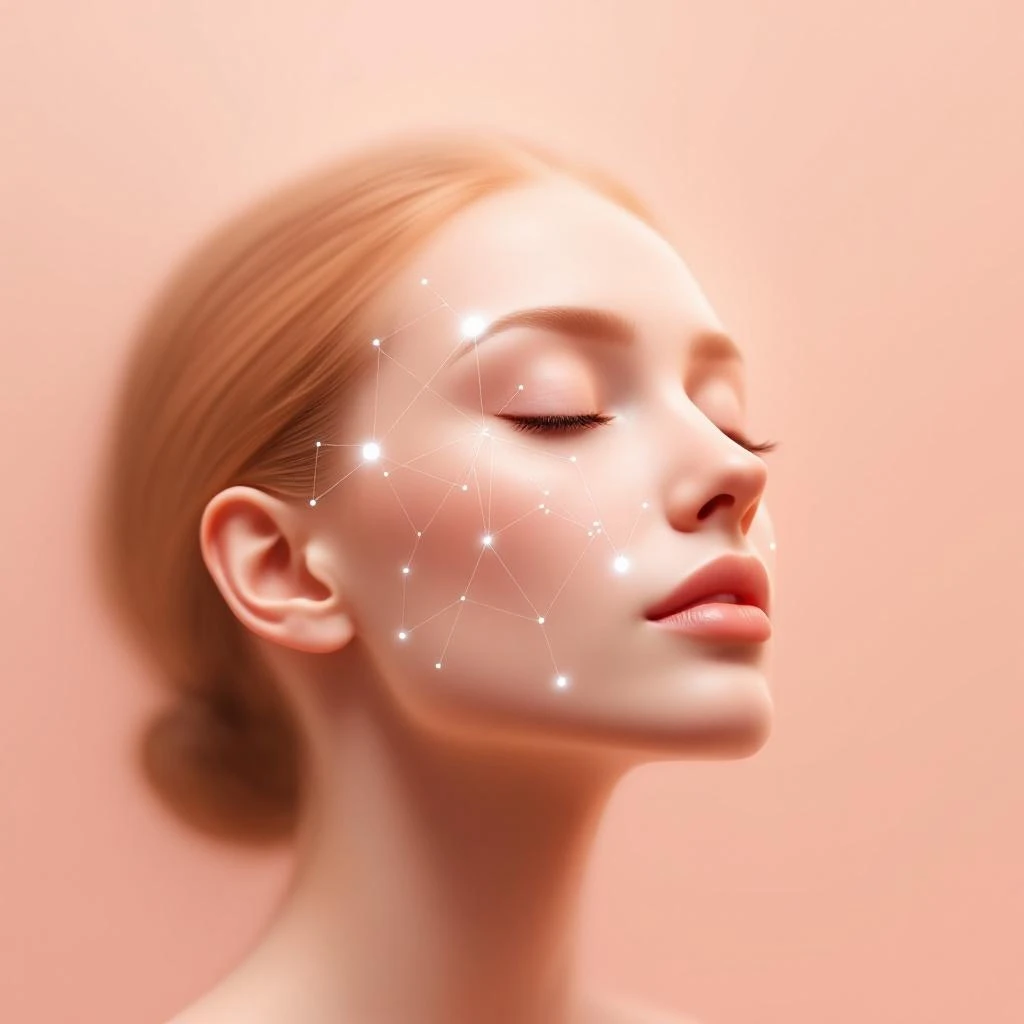
What is Glow Age?
Glow Age is Beeuty's skin-age estimate: an AI model reads the visible signals that human brains use when they guess age from a face — fine-line patterns around the eyes and forehead, texture smoothness, tone evenness, dark-spot density, and the light-reflecting quality that reads as "glow" — and translates them into a number of years. It's calculated from how your skin looks, so it's an aesthetic estimate, not a biological measurement.
The interesting part isn't the number — it's the breakdown. Glow Age shows which signals contributed: maybe your texture reads young while sun-related tone unevenness adds years. That's an actionable sentence, because each signal has a known response.
Why would my skin age differ from my real age?
Because only part of skin aging runs on the calendar. The intrinsic clock — genetic, steady — sets the baseline. The extrinsic clock is lifestyle: UV exposure above all (dermatologists attribute a large share of visible facial aging to photoaging), plus smoking, sleep debt, and high-sugar diets. Two 35-year-olds can photograph a decade apart, and the difference is mostly the second clock. Which is good news, because the second clock is the one you can slow — see our wrinkles guide for exactly how.
Can I lower my Glow Age?
The signals that build the estimate all respond to known interventions, on honest timescales:
- Fast (days–weeks): hydration. Plumped, well-watered skin visibly softens micro-lines and restores glow — often the quickest Glow Age mover. See the Hydration Check.
- Medium (2–4 months): retinoids for texture and fine lines, vitamin C plus SPF for tone evenness.
- Slow but decisive (ongoing): daily sunscreen — it doesn't lower the number this month; it stops the number from climbing for the next decade.
Retake monthly under the same lighting and the estimate becomes a progress meter for all of the above.
What Glow Age is and isn't
It's a cosmetic mirror with a memory: an estimate of how your skin photographs, built for tracking and motivation. It is not biological age, not a health metric, and not a judgment — lighting, makeup residue, and camera quality all nudge it, which is why consistent conditions matter more than any single result. Take the number with lightness, take the trend seriously, and take anything medical to a dermatologist.
Find out your Glow Age
One selfie, one honest number, and a breakdown of exactly which signals are adding years — plus what moves each one.
Download on the App Store